Global Vantage Report
.png)
Weekly Briefing
UAE Builds Strategic Alternatives to Hormuz
Abu Dhabi accelerates infrastructure diversification as attacks expose the vulnerability of Gulf trade to maritime chokepoints.
The UAE is investing in varying avenues for its energy exports by expanding ports, pipelines, railways and alternative trade corridors to reduce its dependence on the Strait of Hormuz after Iranian attacks disrupted energy exports and commercial shipping. Presidential adviser Anwar Gargash said the country's energy exports and broader economy would not be restrained by the conflict, while warning that rebuilding trust with Iran could take decades. The UAE is effectively using the crisis to accelerate a long-term restructuring of its economic geography, shifting infrastructure toward its eastern coast and alternative corridors that could reduce the strategic leverage of any single maritime chokepoint. The trajectory from here will hinge on whether these investments develop into a durable regional trade network, or remain primarily a contingency response to the current confrontation.
AfD Victory Shakes Germany and Alarms Europe
The far right's historic breakthrough is testing Germany's political firewall and unsettling European allies.
Germany's far-right Alternative for Germany (AfD) won 43.8% of the vote and 39 of 83 seats in the state elections in Saxony-Anhalt, more than doubling its 20.8% result in 2021, while Chancellor Friedrich Merz's CDU collapsed from 37.1% to just 17.2%, its worst performance in the state in decades. The result has shaken Germany's political establishment and alarmed European governments, particularly in France and Poland, because the AfD is openly pro-Russian and opposes further support for Ukraine. The party fell short of an absolute majority and is seeking partners to govern with. Merz has ruled out cooperation, reaffirming the postwar firewall against the far right. If they find enough supporters to work with them, it would be the first time a far-right party takes power at state level in postwar Germany. Voter turnout rose sharply, suggesting that the AfD is not simply mobilizing protest voters but increasingly converting deep dissatisfaction with mainstream parties into active political participation. The trajectory from here will hinge on whether Germany's political firewall survives intact, particularly as the AfD seeks to turn its regional breakthrough into momentum ahead of the next federal election and other key state contests.
EU Deepens Greenland Ties as Arctic Competition Intensifies
Brussels combines economic investment with strategic signaling as Greenland becomes increasingly central to the contest for influence in the Arctic.
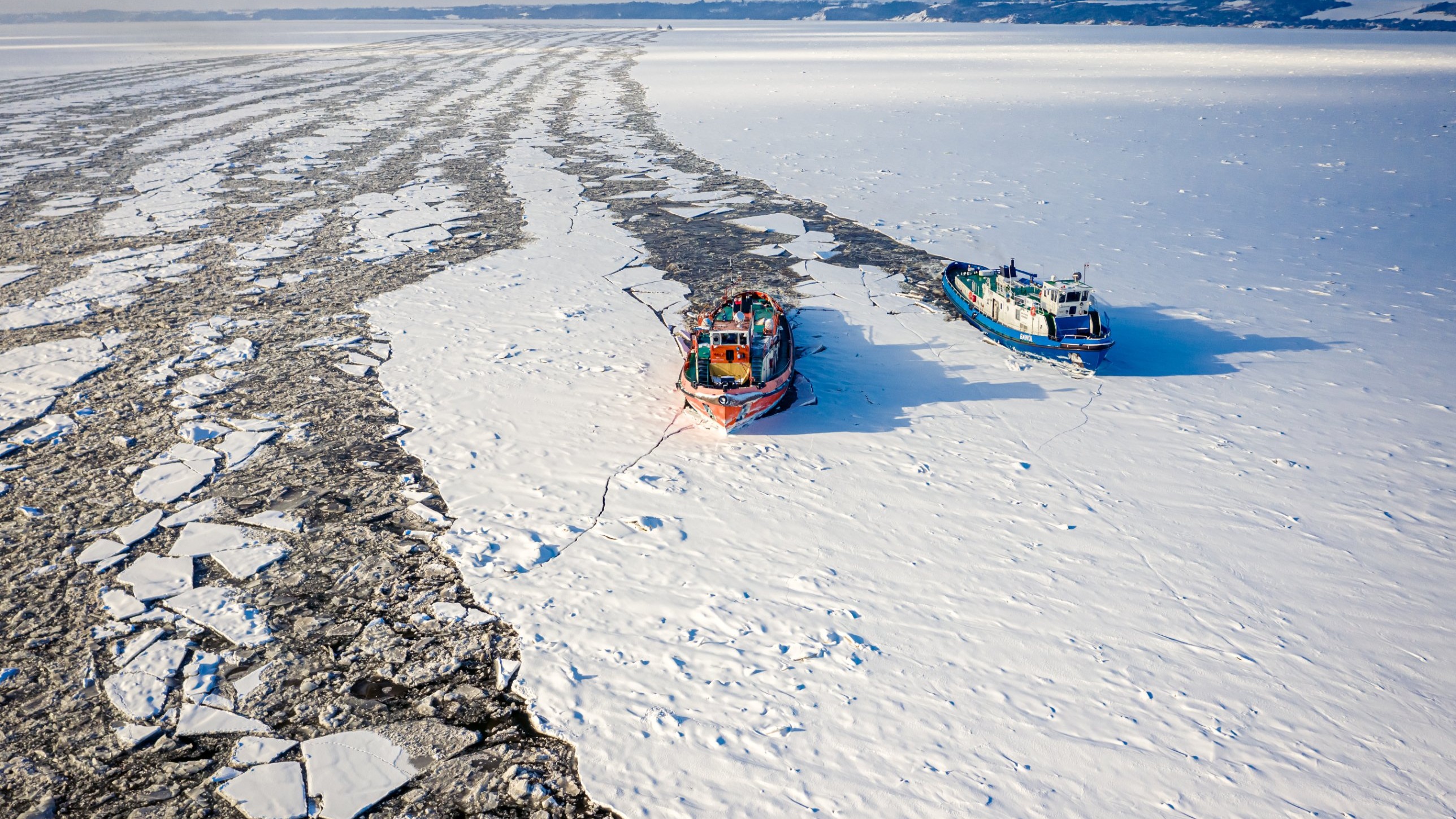
European Commission President Ursula von der Leyen announced on Monday, during a visit to Greenland, a €200 million ($232 million) partnership between the EU and Greenland for 2026–27, targeting digital connectivity, sustainable mining, energy, tourism, education, fisheries and housing as Brussels seeks a stronger foothold in the strategically important Arctic territory. The initiative comes amid renewed U.S. pressure over Greenland and a broader contest involving the United States, Russia, China and Europe over Arctic security, resources and emerging shipping routes. The EU is attempting to build influence through economic integration rather than territorial or military power: Greenland holds deposits of critical minerals needed for advanced technology and defense, making infrastructure and resource partnerships increasingly strategic assets. U.S. President Donald Trump continues to insist that Greenland should belong to the United States. The trajectory from here will hinge on whether Brussels can translate financial commitments into a durable economic and political partnership with Greenland while reinforcing Denmark's position and Europe's strategic role in the Arctic.
Ceuta Crisis Deepens Spain's Political and Diplomatic Strains
Public anger over the migration surge is strengthening Spain's right as tensions with Morocco complicate an already fragile relationship.
According to opinion polls released on Monday, the majority of Spaniards rate Prime Minister Pedro Sanchez's handling of the recent migrant crisis in Ceuta as "bad" or "very bad". It also showed a drop in support for Sanchez's party. The findings suggest the episode is becoming more than a migration crisis, with public attitudes hardening on border control and conservative Vox emerging as the party most trusted to manage immigration, raising the prospect of a durable political realignment. The less obvious significance is the scale of the strategic dilemma as Ceuta is both an EU external border and a Spanish enclave surrounded by Morocco, making migration pressure there inseparable from Spain's broader diplomatic relationship with Rabat and Europe's management of its southern frontier. The trajectory from here will hinge on whether Sanchez can restore confidence in his handling of the border without further straining relations with Morocco or allowing Vox to consolidate its gains.
Russia Escalates Diplomatic Retaliation Against Germany After Drone Dispute
The tit-for-tat closures mark a further erosion of Germany-Russia ties as hybrid warfare increasingly spills into diplomatic relations.
Russia has announced the closure of Germany's consulate in St. Petersburg following Berlin's decision to close Russia's consulate in Bonn and a Russian cultural center, after Germany accused Moscow of involvement in a failed explosive-drone attack near Leipzig/Halle Airport. Moscow has rejected the accusation, with President Vladimir Putin alleging that Germany fabricated evidence. The confrontation is dismantling some of the remaining institutional channels between the two countries as Russia is also closing Goethe-Institut centers in Moscow, St. Petersburg and Yekaterinburg, turning what began as a dispute over a suspected hybrid attack into a broader contraction of diplomatic and cultural ties. For policymakers, the more consequential question will be whether Berlin and Moscow continue responding to suspected hybrid operations through reciprocal diplomatic closures, or whether European governments develop a more coordinated response to Russia's increasingly confrontational tactics.
Costa Rica President Indicates a U.S. Security Presence Could Benefit National Security
Costa Rica signals a striking shift in security policy as organized crime increasingly challenges one of Latin America's most stable democracies.
Costa Rican President Laura Fernandez has said U.S. ground operations could be "very beneficial" to national security if focused on combating transnational crime, drug trafficking and terrorism, although no agreement is currently under discussion and any deployment would require legislative approval. The proposal reflects Fernandez's hardline response to a surge in violent crime: the homicide rate reached a record 17.2 per 100,000 people in 2023, double its level a decade earlier, although the rate fell 14% in the first half of 2026. Costa Rica abolished its military in 1948, making any sustained U.S. ground presence politically and symbolically significant for a country whose security model has long rested on civilian institutions rather than armed forces. The trajectory from here will hinge on whether Fernandez's government can deepen security cooperation with Washington without provoking domestic resistance or weakening the judicial checks that have already become a source of tension with her administration.
Serbia Heads for Snap Election as Vucic Seeks Political Reset
Early elections offer the president a route to reassert control after nearly two years of anti-government protests.
Serbia's government has asked President Aleksandar Vucic to dissolve parliament and call a snap election, expected in mid to late October, nearly 15 months ahead of the scheduled 2027 vote, as his government seeks to defuse a student-led protest movement that has shaken his 14-year political dominance. The protests began after the November 2024 Novi Sad railway-station collapse killed 16 people, with demonstrators accusing the government of corruption, cronyism and weakening democratic institutions; Vucic's allies deny the allegations and say the protests are politically motivated. The less obvious significance is that the election could also facilitate a carefully managed transfer of power as Vucic cannot seek another presidential term and his Serbian Progressive Party has proposed that he become prime minister if it wins, allowing him to retain executive influence while moving from the presidency into a potentially more powerful governing role. The election carries the potential to either succeed in restoring political legitimacy or to instead become another confrontation between Vucic's entrenched political machinery and a protest movement seeking to transform Serbia's political system.
Russia and North Korea Deepen Strategic Ties Through New Road Link
The new bridge transforms a symbolic partnership into more tangible economic and logistical connectivity.
North Korea and Russia have opened their first dedicated road bridge across the Tumen River, creating a new 1-kilometer link between the two countries and marking another step in their rapidly expanding strategic partnership. Moscow says the bridge will boost trade, tourism and employment, complementing existing rail and air connections, while the project follows the 2024 Putin-Kim agreement that has accelerated bilateral cooperation. The bridge, designed for up to 300 vehicles a day, provides North Korea with an additional land route to Russia and connects directly into Russia's national road network. That connectivity facilitates a more concrete economic relationship and could make it easier to move goods through a relationship already under intense international sanctions scrutiny. This comes at a time when Pyongyang has become an important military partner for Moscow in the Ukraine war, potentially giving the relationship greater logistical depth even as both governments emphasize economic cooperation.
Israel's Election Takes Shape as Netanyahu Faces Stronger Challenge
The October 27 vote is shaping up as a contest over security, leadership and the future direction of Israel's right.
With the deadline for submitting candidate lists now passed, Israel's October 27 election has crystallized into a closely contested race in which Prime Minister Benjamin Netanyahu's Likud remains a major force but his nationalist-religious bloc is struggling to reach the 61 seats needed for a governing majority. Former military chief Gadi Eisenkot's Yashar has emerged as Likud's strongest challenger, while Naftali Bennett's B'Yachad, Yair Golan's Democrats and Avigdor Lieberman's Yisrael Beiteinu are competing for the broader center-right and center-left vote; on the governing side, Shas, United Torah Judaism, Religious Zionism-Zehut and Itamar Ben-Gvir's Otzma Yehudit remain central to Netanyahu's coalition prospects. Arab parties will also form part of any coalition option, with the Arab-majority parties seeking to maximize their representation. Israel's 3.25% electoral threshold makes the final composition of the Knesset highly sensitive to the performance of smaller parties: votes for factions that fall short are effectively excluded from coalition arithmetic, meaning the election could be decided as much by fragmentation as by the identity of the largest party. The trajectory from here will hinge on whether Netanyahu can retain enough support among security-conscious and religious voters to reconstruct a governing majority, or whether Eisenkot and his allies can assemble an alternative coalition around a promise of political and security renewal.
U.S. Broadens Venezuela Strategy From Oil to Critical Minerals
Washington is seeking to turn Venezuela's resource wealth into a broader strategic asset.
The Trump administration is seeking greater access to Venezuela's mineral resources, including gold, iron ore, bauxite and nickel, expanding Washington's economic ambitions beyond the oil sector as interim President Delcy Rodriguez opens the country to U.S. investment. The move is part of a broader effort to reduce Chinese influence in Latin America and secure supplies of minerals considered important to U.S. economic and national security, with Washington considering further measures to facilitate American investment in Venezuela's mining industry. Venezuela's mineral wealth could prove strategically important precisely because its oil resources have dominated international attention for decades, while its poorly surveyed deposits remain largely underdeveloped and in some areas under illegal control. Washington will need to translate political access into commercially viable mining projects while overcoming Venezuela's weak infrastructure, limited geological data and longstanding concerns over legal and investment security.
Looking Ahead to Next Week
Sweden's Election Tightens as Liberals Clear Key Threshold
The final week of campaigning has transformed a seemingly settled contest into a genuine test of Sweden's governing coalition.
Sweden's center-left opposition retains a narrow lead over Prime Minister Ulf Kristersson's ruling right-wing bloc, at 50.3% to 47.9%, but the latest Novus poll shows the gap has narrowed dramatically as the campaign enters its final week. The biggest development is the Liberal Party's recovery to 4.3%, just above the parliamentary threshold, reducing the risk that the governing bloc could lose its coalition arithmetic even if it trails in the popular vote. Sweden's proportional electoral system makes the fate of a party polling only a few percentage points potentially decisive: the Liberals' survival could determine whether the right can remain competitive in parliament and shape the next government. Sunday's election will determine whether the Liberals can stay above 4%, and whether the final result produces a clear governing majority or another round of difficult coalition negotiations.
BRICS Summit Tests the Cohesion of the Global South
India hosts an expanded grouping as members seek greater economic autonomy while navigating deep geopolitical divisions.
India will host the 18th BRICS Leaders' Summit in New Delhi on September 12–13, bringing together an expanded group of emerging economies at a moment of heightened geopolitical and economic fragmentation. The agenda is expected to span trade, investment, energy security, digital cooperation, climate and reform of global institutions, with particular attention on reducing vulnerabilities in payments and supply chains. China's participation will be especially significant as President Xi Jinping is likely to attend with a large delegation, potentially making his first visit to India in seven years and turning the summit into an important test of the fragile India-China rapprochement as well as BRICS cohesion. The key question will be whether the expanded grouping can translate its growing economic weight into practical institutional power without becoming an explicitly anti-Western bloc, with the final summit declaration offering an important measure of how much strategic consensus BRICS can actually command.
European Parliament Returns to a High-Stakes Autumn Agenda
MEPs face a legislative test of Europe's ambitions for defense, economic security and support for Ukraine.
The European Parliament's return from its summer recess on September 15 is expected to open a consequential legislative session focused on implementing the EU's Defence Readiness 2030 agenda, advancing the Competitiveness Compass and strengthening the bloc's economic-security framework. Particular attention will fall on reducing regulatory burdens, deepening the Single Market, and tightening scrutiny of outbound investment and exports of sensitive technologies as Europe seeks greater strategic autonomy. The most consequential debate may be over Ukraine, where MEPs are expected to revisit the use of frozen Russian assets, additional sanctions and progress toward EU accession at a time when Europe's defense preparedness remains under scrutiny and legal concerns continue to constrain the use of Moscow's reserves. Something to look out for in the week ahead is whether Parliament can translate these strategic ambitions into concrete measures, particularly on defense spending, economic security and the use of Russian assets to support Ukraine.
Dangote Refinery IPO Marks Major Test for African Capital Markets
Africa's largest refinery is seeking public investment as Nigeria positions itself for greater energy independence and regional influence.
Aliko Dangote says the IPO for his Nigerian refinery will open in the next 10 to 12 days, with the landmark listing expected to become Africa's largest share sale and provide funding for an ambitious expansion to 1.4 million barrels per day. The refinery has already transformed Nigeria's energy landscape by reaching full capacity and reducing the country's dependence on imported refined fuel, while its scale gives it growing importance as Middle Eastern supply disruptions reshape global energy markets. The IPO is also a test of whether Nigeria can deepen its domestic capital markets by allowing ordinary Nigerian investors to participate in one of the country's most strategically important industrial assets, rather than relying predominantly on foreign capital. Something to look out for in the week ahead is investor appetite for the offering, which will provide an early indication of whether markets are willing to support Dangote's expansion plans and Nigeria's broader ambition to become a major refined-fuel supplier to Africa.
Milei Escalates Falklands Dispute as Oil Raises Strategic Stakes
Argentina links a longstanding sovereignty claim to offshore resources as Trump's comments introduce new uncertainty into the dispute.
The Falkland Islands have been under British control since 1833, but Argentina has continued to claim sovereignty, a dispute that culminated in the 1982 war. The issue has gained new geopolitical weight after U.S. President Donald Trump said Washington was reviewing its historically neutral position, prompting Argentine President Javier Milei to argue that the "winds of change" now favor Argentina's claim. Milei has responded by announcing tougher sanctions on companies involved in oil exploration around the islands and plans to strengthen Argentina's legal and military capacity, targeting the emerging Sea Lion field, estimated to contain well over a billion barrels. Britain has reaffirmed its "unwavering" commitment to the islanders' right to self-determination. The less obvious significance is that the dispute is increasingly becoming an energy-security issue rather than solely a sovereignty question: successful development of Sea Lion could give the remote islands a substantial new economic and strategic role in the South Atlantic. The trajectory from here will hinge on whether Milei's measures remain primarily diplomatic and economic, or generate a broader confrontation involving British defense policy, the oil companies and Washington's evolving position.
.png)
© 2026 Global Vantage Forum