Global Vantage Report
Weekly Briefing
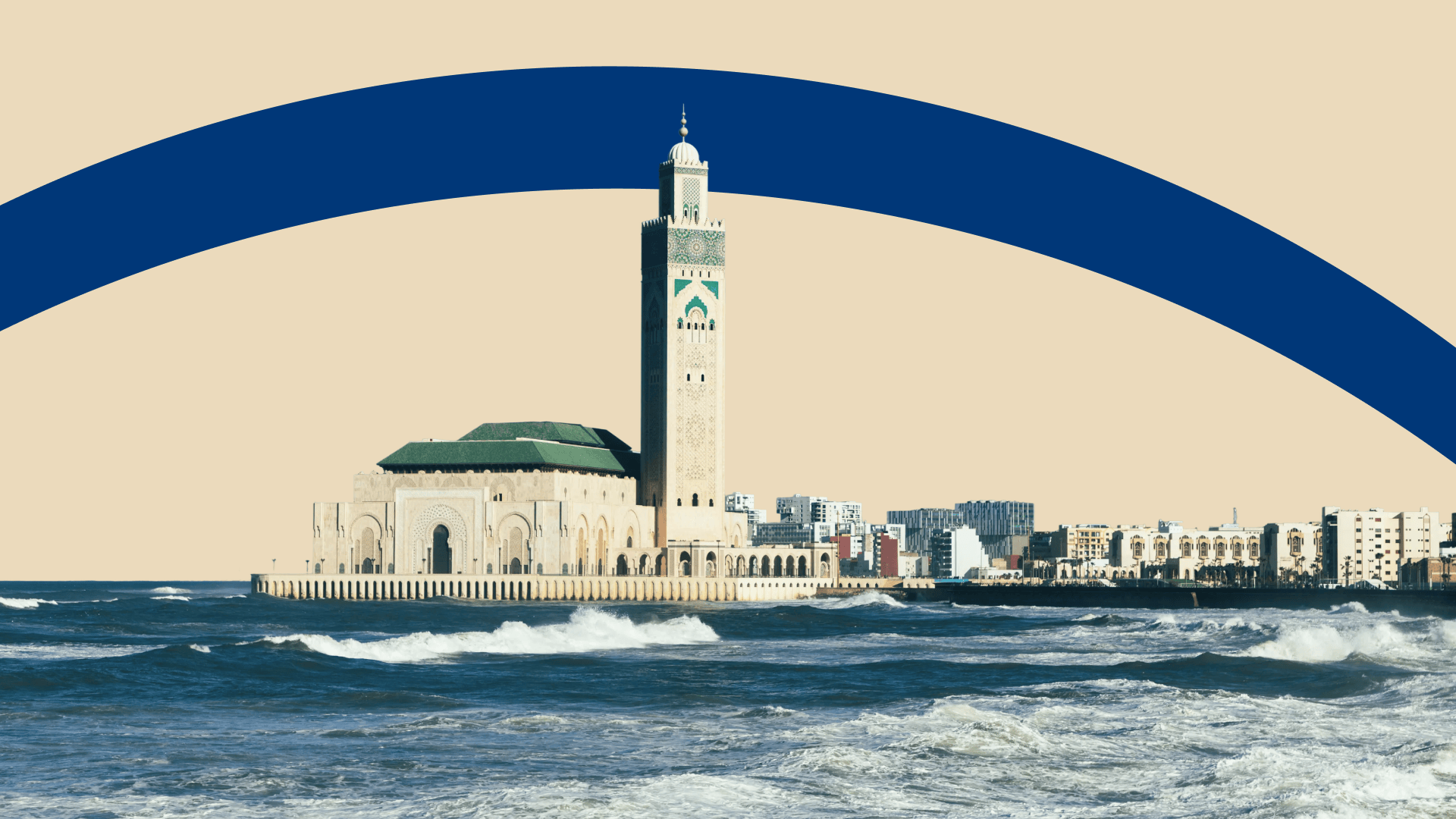
Morocco Appoints First Woman Prime Minister as Political Expectations Rise
Fatima Ezzahra El Mansouri's appointment marks a historic breakthrough as the new government confronts mounting pressure to translate economic growth into broader social gains.
King Mohammed VI has appointed Fatima Ezzahra El Mansouri as Morocco's first female prime minister after her liberal-centrist Authenticity and Modernity Party (PAM) emerged as the largest party in the September 23 parliamentary election, giving her the task of forming a coalition government. The appointment is significant beyond its symbolism: Morocco's monarchy retains decisive authority over foreign policy, defense and other strategic portfolios, while El Mansouri's government will be responsible primarily for domestic economic and social priorities, including employment, inflation and public services. The challenge facing the government is the gap between Morocco's strong investment-led growth and persistent youth dissatisfaction, which it has pledged to address with new economic policies. They will also oversee the final stage of a $20 billion infrastructure program tied to the 2030 World Cup. El Mansouri will need to use her coalition-building mandate to convert that investment momentum into tangible employment and living-standard gains while maintaining the political stability underpinning Morocco's broader economic strategy.
Russia Prioritizes War Spending as Fiscal Pressure Deepens
The 2027 budget reveals how the Kremlin is increasingly absorbing the economic costs of a prolonged war into domestic spending priorities.
Russia plans to raise defense spending to 17.1 trillion rubles ($202.6 billion) in 2027, 27% above its original allocation, while cutting funding for welfare, education and healthcare. The shift comes as Moscow's fiscal position deteriorates, with higher borrowing, tax increases, reduced oil-and-gas revenue estimates and rising debt-service costs increasingly reflecting the strain imposed by the war. The pressure is beginning to extend beyond the headline deficit: debt servicing is projected to absorb 9.4% of total spending next year and 10.6% by 2029, meaning the opportunity cost of the war is increasingly embedded in the structure of the Russian state rather than confined to military accounts. Analysts will be observing whether sustained military expenditure can be maintained without further eroding domestic investment and household support, particularly as the Kremlin continues to prioritize the war over competing economic needs.
U.S. and Japan Align on Yen as Currency Pressure Becomes Economic Security Issue
Washington's concern over the weak yen signals that exchange rates are becoming increasingly intertwined with trade, inflation and financial stability.
U.S. President Donald Trump raised concerns about yen weakness with Japanese Prime Minister Sanae Takaichi, at a recent meeting in New York, prompting Tokyo and Washington to reaffirm their commitment to countering excessive currency volatility following their coordinated intervention in July. The unusually explicit discussion reflects a broader shift in the relationship, as a weak yen is no longer viewed solely as a Japanese monetary issue but also as a factor affecting U.S. trade, Japanese import costs and global financial markets. The less obvious significance is the link to Japan's bond market: the 10-year government yield has reached around 3.1%, its highest level since 1996, raising the prospect that pressure on the yen and rising Japanese borrowing costs could interact in ways that spill into the U.S. Treasury market. The key question is whether Tokyo can stabilize the yen without resorting to renewed intervention or abandoning the economic strategy of Takaichi's government, particularly as U.S. pressure for tighter inflation control intensifies.
Argentina's External Accounts Turn Positive as Export Engine Gathers Momentum
The current-account turnaround offers evidence that Javier Milei's reforms are beginning to strengthen Argentina's external position, even as domestic growth remains uneven.
Argentina recorded a $2.21 billion current-account surplus in the second quarter of 2026, reversing a $2.45 billion deficit a year earlier and a $2.41 billion shortfall in the first quarter, as stronger exports and restrained imports improved the country's external balance. Analysts note the significance of the changing composition of Argentina's export engine as Vaca Muerta - the massive shale rock formation that holds some of the largest unconventional oil and gas reserves in the world - is rapidly emerging alongside agriculture as a source of hard currency. Energy exports generated a record $7.83 billion surplus in the first eight months of 2026, already exceeding the full-year 2025 total. This matters because Argentina needs sustained foreign-currency earnings to rebuild reserves and reduce its dependence on external financing, while the IMF says stronger external buffers remain central to the country's stabilization program. Argentina will need to ensure that the external improvement can become durable enough to finance investment and debt obligations while translating into broader domestic growth.
Burnham Faces Early Test as Promises Collide With Britain's Fiscal Reality
The new prime minister has inherited an economy in which limited fiscal headroom could make his reform agenda difficult to deliver.
Prime Minister Andy Burnham has promised a broad program of intervention across housing, social care, utilities and regional development, but his early agenda is already confronting the constraints of weak growth, elevated borrowing costs and limited room for additional public spending. The mismatch between the scale of Burnham's political promises and the government's ability to finance them is significant and measures intended to deliver visible improvements quickly could require either higher taxes, additional borrowing or politically difficult spending reductions elsewhere. His proposals for greater public control of utilities and increased state investment also risk creating a tension between his ambition to reshape the economy and the need to reassure investors that Britain's public finances remain under control. The Labour government's test in the months ahead will be whether the October budget can provide credible funding for Burnham's priorities without exposing the gap between his reform ambitions and the government's limited fiscal capacity.
Iran's Economic Crisis Deepens as War Erodes Living Standards
Seven months of conflict and intensified economic pressure are pushing Iran's already fragile economy toward a more acute structural crisis.
Iran's economy is under mounting strain as the U.S. blockade of Iranian oil exports cuts into the government's principal source of foreign currency, while the rial has fallen beyond 2.5 million to the dollar and prices for basic goods, housing and imported necessities continue to surge. The deterioration is extending beyond purchasing power into employment and private-sector activity, with businesses cutting jobs and investment as shortages, disrupted trade and currency instability make normal economic planning increasingly difficult. The less obvious significance is that the economic pressure is becoming a political risk: Iranian leaders have repeatedly expressed concern that worsening living standards could reignite nationwide unrest, while the January protests demonstrated that economic grievances can rapidly develop into a broader challenge to the regime. The next phase of the crisis may well depend on whether Tehran can contain growing public dissatisfaction through repression and economic adjustments, or whether further deterioration begins to overcome the population's current wartime tolerance and trigger a new wave of protests.
Grynspan Emerges as Leading Contender in Race to Succeed Guterres
The contest to lead the United Nations is becoming a test of whether the organization can find a leader capable of navigating geopolitical fragmentation and institutional decline.
Costa Rica's former vice president Rebeca Grynspan has emerged as the narrow frontrunner in the race to become the United Nations' next secretary-general, topping successive confidential Security Council polls as the process enters a decisive phase. Her closest rival is Guyana's UN ambassador Carolyn Rodrigues-Birkett, while the field includes senior diplomats and former leaders, but no candidate has yet secured a clear consensus among the 15-member council. Grynspan would become the UN's first woman secretary-general, and the first Jewish leader of the organization, at a moment when its authority is being tested by wars, declining U.S. support and growing demands for institutional reform. Grynspan will need to maintain her narrow advantage while securing the support of all five permanent Security Council members, whose veto power means that broad popularity among the wider membership is ultimately insufficient without agreement among Washington, Beijing, Moscow, London and Paris.
Sweden's Election Produces Majority Without a Government
The center-left's narrow parliamentary victory has exposed the deeper coalition fractures beneath Sweden's apparently clear election result.
Social Democratic leader Magdalena Andersson has abandoned her attempt to form a government after the center-left bloc won 176 of parliament's 349 seats, with the Left Party refusing to provide the support needed to translate that majority into a governing coalition. Sweden's electoral arithmetic now gives smaller parties disproportionate leverage: the Left Party and the liberal Centre Party occupy opposing positions on coalition participation, making the nominal three-seat majority far less politically usable than it appears. Parliament Speaker Andreas Norlén is expected to give outgoing Prime Minister Ulf Kristersson the next opportunity to form a government, but his center-right bloc also lacks a majority and depends on navigating its relationship with the Sweden Democrats, whose support has already reshaped Swedish politics. If Sweden's parties fail to overcome their coalition red lines to produce a workable government with the speaker's four permitted attempts, it may ultimately lead to an extraordinary election.
Israel's Election Enters Final Stretch as Security Credentials Shape Coalition Battle
The October 27 vote is increasingly defined by competing visions of Israel's security, national identity and the coalition required to govern after the election.
With Israel's October 27 election approaching, Prime Minister Benjamin Netanyahu's Likud remains the central force on the right, while former IDF chief Gadi Eisenkot's Yashar has emerged as the principal left leaning challenger alongside Naftali Bennett, Yair Golan and Avigdor Liberman in the broader opposition bloc. Recent polling places both major camps below the 61-seat threshold, ensuring that the composition of smaller parties and their willingness to join or support a government could prove decisive in determining the next coalition. Eisenkot has set explicit conditions for potential coalition partners, saying Arab and Haredi parties would need to recognize Israel as a Jewish and democratic state, accept the Declaration of Independence and universal military service, and recognize Hamas as a terrorist organization that must be destroyed. He has also stated that no Arab or ultra-Orthodox party currently meets his conditions for joining a government. The resulting contest is therefore not simply a choice between political personalities but a debate over how Israel balances military readiness, national cohesion and the religious-secular relationship while preserving the parliamentary stability needed to confront a demanding regional environment.
UAE-Saudi Rapprochement Gains Urgency Amid Houthi Pressure
The first senior Emirati visit since last year's rupture signals a pragmatic effort to rebuild Gulf coordination as regional security deteriorates.
UAE Vice President Sheikh Mansour bin Zayed Al Nahyan visited Saudi Arabia for the first high-level Emirati visit since a major rift erupted last year, meeting Crown Prince Mohammed bin Salman and Defense Minister Prince Khalid bin Salman to discuss bilateral and regional affairs. The timing is significant as Riyadh is facing sustained missile and drone attacks from Iran-backed Houthis and is seeking broader regional support, creating a powerful incentive to repair ties with Abu Dhabi, once its principal partner in the Yemen war. The dispute had exposed fundamental differences between the two Gulf powers over Yemen, geopolitics and even oil policy, culminating in Saudi strikes on a UAE-linked weapons shipment at the port of Mukalla and the subsequent Emirati withdrawal from Yemen. Notably, renewed Saudi-UAE coordination could matter well beyond Yemen as the two states possess complementary influence over different Yemeni factions, meaning rapprochement could reshape the balance of power around the Bab el-Mandeb, one of the world's most important maritime chokepoints.
Looking Ahead to Next Week
Brazil's Election Becomes a Test of Latin America's Political Direction
Lula is seeking another term as the region's left confronts a broader conservative resurgence.
President Luiz Inacio Lula da Silva is entering the final stretch of Brazil's presidential campaign, ahead of next week's October 4 election, which he is portraying as a contest over democracy, national sovereignty and the direction of Latin America, as he faces Senator Flavio Bolsonaro, son of former president Jair Bolsonaro. Lula's government has presided over declines in unemployment and inequality, but rising living costs and persistent polarization have left the president in a closely contested race, with recent polling showing the two statistically tied in a potential runoff. Significantly, with Brazil's geopolitical weight as Latin America's largest economy and a leading voice in the BRICS grouping, the election could influence not only the region's political balance but also its economic relationship with China, the United States and Europe. The key question in the weeks ahead will be whether Lula can convert his economic record and international stature into another mandate, or whether the Bolsonaro movement can capitalize on the region's broader shift toward conservative governments.
Latvia's Election Puts Pro-Ukraine Consensus Under New Pressure
The October 3 vote could reshape Riga's coalition while testing the durability of its firmly pro-Kyiv foreign policy.
Latvia heads to parliamentary elections on October 3 after a political upheaval that saw Prime Minister Evika Silina resign and opposition leader Andris Kulbergs unexpectedly take the premiership with the United List, on whose ticket he was elected, now emerging as a leading force. Kulbergs has maintained strong support for Ukraine, including backing a joint Latvian-Ukrainian strike-drone manufacturing plant, while the pro-Ukraine National Alliance is expected to remain central to any governing coalition. The likely coalition arithmetic could bring Latvia First, led by businessman Ainars Slesers, into government; although the party supports Ukraine's EU accession, it opposes NATO membership for Kyiv and has actively courted Russian-speaking voters. The critical variable to watch for in the week ahead will be whether Latvia can accommodate this populist pressure without weakening its unusually firm security alignment with Ukraine and the broader NATO position on Russia.
Bosnia's Election Puts Ethnic Divisions at the Center of the Campaign
Next week's vote will test whether a deeply polarized political system can move beyond its entrenched constitutional fault lines.
Bosnia and Herzegovina votes on October 4 in a general election dominated by disputes between its Bosniak, Serb and Croat political blocs, with candidates campaigning heavily on ethnic identity and the competing powers of the country's two autonomous entities. The contest comes amid persistent institutional paralysis, with opposition figures arguing that political leaders are devoting more attention to constitutional and identity disputes than to the economy, healthcare, education or Bosnia's European integration. The key question in the week ahead will be whether the vote produces enough political cohesion to advance Bosnia's EU path, or whether the country's postwar power-sharing system once again reinforces the divisions it was designed to manage.
Ethiopian Forces Regain Strategic Ground as Tigray Conflict Intensifies
The capture of Alamata shifts the battlefield as the fragile 2022 peace agreement continues to unravel.
Ethiopian federal forces and allied militias have captured the strategic town of Alamata in southern Tigray, according to pro-government forces and diplomatic sources, reversing an offensive by the Tigray People's Liberation Front (TPLF) that had seized territory and several airports earlier this month. The town, roughly 120 kilometers south of Tigray's capital Mekelle, is a key supply hub for troops, fuel and food, giving its capture potential significance beyond the immediate battlefield as federal forces seek to consolidate their position and advance north. Notably, the renewed fighting is occurring alongside deteriorating Ethiopia-Eritrea relations and instability in neighboring Amhara and Afar, raising the possibility that what began as a Tigray confrontation could become part of a wider Horn of Africa security crisis. The key issue to watch in the week ahead will be whether federal forces press toward Mekelle or whether regional and international pressure can halt the fighting before the 2022 Pretoria peace framework collapses completely.
North Korea Expands Military Role in Russia's War
Pyongyang's growing troop commitment is turning its partnership with Moscow into a more consequential military relationship.
Ukrainian President Volodymyr Zelenskiy says more than 8,000 North Korean troops are currently in Russia and that another 10,000 are being selected for training and deployment in the conflict, suggesting that Pyongyang's involvement in the war is becoming a sustained military commitment rather than a limited intervention. North Korea has already supplied Russia with substantial military assistance, while its troops have gained battlefield experience in Ukraine, creating an increasingly reciprocal relationship in which Moscow provides military and technological expertise in return for personnel and weapons. The arrangement gives North Korea something it has historically lacked: practical experience in modern high-intensity warfare, potentially accelerating its capabilities in drones, missiles and combined-arms operations well beyond the Korean Peninsula. The key issue in the week ahead will be whether Moscow and Pyongyang move from preparation to an expanded deployment, which would deepen the military relationship between the two countries and further internationalize Russia's war effort.
.png)
.png)
© 2026 Global Vantage Forum