Global Vantage Report
Weekly Briefing
South Korea Makes Historic Breakthrough on Arctic Shipping Route
Seoul's first Arctic container voyage marks a milestone in its drive to diversify global trade routes and strengthen maritime connectivity.
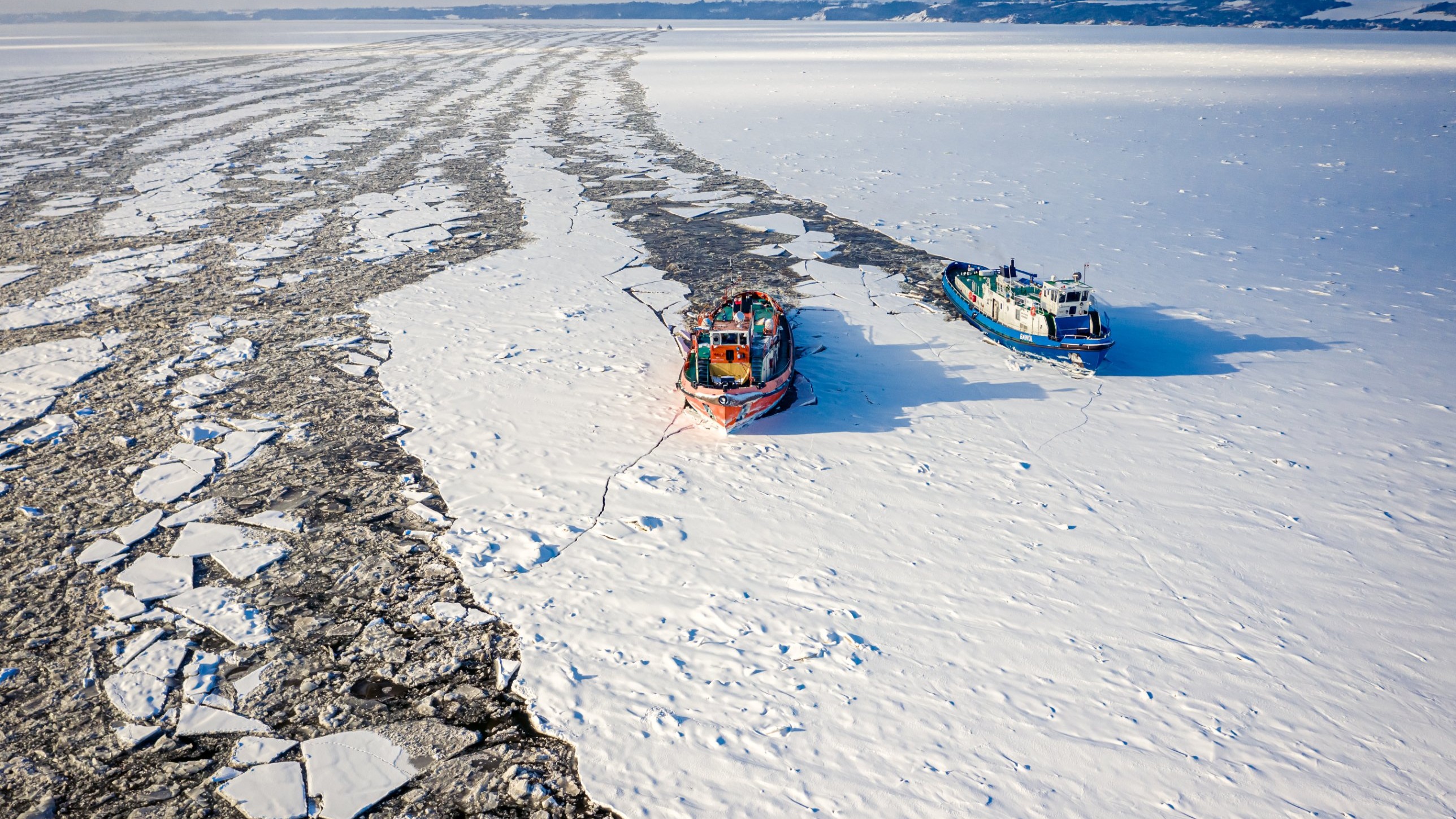
South Korean President Lee Jae Myung has pledged to develop Arctic shipping in accordance with international rules and sanctions, after the PanStar Acro completed the country's first round-trip container voyage between Busan and Europe via the Arctic in 50 days. The route could reduce sailing time by roughly one-third compared with the Suez Canal, offering Seoul an alternative to vulnerable maritime chokepoints and supporting its ambition to establish regular services by 2030. The route's strategic promise currently exceeds its commercial performance: the vessel departed with only 737 containers against a target of 1,300 and returned without imported cargo, highlighting the difficulty of securing profitable two-way trade. With further trial voyages planned for 2027, the critical question is whether Seoul can turn this historic milestone into a commercially viable route as the conflict in the Middle East and melting Arctic ice reshapes the geography of global shipping.
India's 'Cockroach' Youth Movement Escalates Challenge Over Voter Rolls
Detentions intensify a confrontation over electoral integrity that is testing public confidence in India's democratic institutions.
Indian police detained leaders of the youth-led Cockroach Janta Party on Tuesday after they defied barricades to enter a historic protest site in New Delhi, demanding the resignation of Chief Election Commissioner Gyanesh Kumar over a controversial revision of voter lists. The exercise has removed more than 130 million names, including deceased and relocated voters, but opposition groups allege that minority voters have been disproportionately affected, a charge denied by the Election Commission and Prime Minister Narendra Modi's ruling Bharatiya Janata Party. The movement has already demonstrated its ability to translate public anger into political consequences: earlier protests over examination paper leaks helped force the education minister to resign, giving this loosely organized youth movement a record of tangible influence beyond street demonstrations. With opposition parties pursuing legal challenges and the authorities restricting access to traditional protest venues, observers will be noting whether the dispute moves toward judicial scrutiny and electoral safeguards or escalates into a broader confrontation over the independence of India's institutions.
EU Expands Migration Cooperation With Eastern Libya Despite Political Divisions
Brussels is deepening engagement with a powerful regional authority to curb Mediterranean crossings, prioritizing practical cooperation over diplomatic convention.
The European Union has committed an additional €25 million ($29 million) to expand migration cooperation with eastern Libya, funding border management, search-and-rescue operations and efforts to combat smuggling as departures toward Europe increase. The move deepens Brussels' engagement with military commander Khalifa Haftar, whose forces control eastern Libya, despite the EU formally recognizing only the rival, internationally recognized government in Tripoli. Significantly, migration policy is becoming a driver of Europe's de facto diplomacy as the need to control Mediterranean routes is pushing Brussels to work with authorities it does not formally recognize, exposing the limits of diplomatic recognition when operational control lies elsewhere. The next test will be whether the new funding, alongside plans for a maritime rescue coordination center in Benghazi, reduces departures and smuggling without deepening Libya's political fragmentation or leaving migrants more vulnerable to abuse.
Trump Says China and Russia Have Remained Neutral in Iran War
The president argues that Beijing and Moscow have too much to lose by supporting Tehran, underscoring his emphasis on keeping the conflict from widening.
President Donald Trump has dismissed suggestions that China and Russia are assisting Iran in its war with the United States and Israel, insisting that both powers have committed to remaining neutral and have too much to lose by intervening. He said that any assistance, if it existed at all, would be minimal and that Washington would detect it quickly, reaffirming his confidence in assurances he says he received from Chinese President Xi Jinping and his assessment of Russian President Vladimir Putin's stance. The strategic significance is that Trump is distinguishing between Beijing and Moscow's close relationships with Tehran and their willingness to risk a direct confrontation with Washington, treating their restraint as a diplomatic achievement rather than assuming their alignment with Iran makes intervention inevitable. Attention will focus on whether evidence emerges that either power has breached its commitment, and whether Trump's confidence in their neutrality can hold as the conflict continues to test relations among the major powers.
Congo's Former President Kabila Takes Direct Leadership of Rebel Alliance
The move threatens to intensify eastern Congo's conflict and complicate international efforts to secure a negotiated settlement.
Former Democratic Republic of Congo President Joseph Kabila has launched a new political-military coalition incorporating the M23 rebel movement, taking a more direct leadership role in the insurgency against President Felix Tshisekedi's government. The new group, known as the Front pour la Refondation de la Nation (FRN) brings together rebel leaders and political figures who accuse Tshisekedi of corruption and authoritarianism, while seeking to coordinate opposition forces across the mineral-rich country's east. The striking historical parallel is that Kabila's father, Laurent Kabila, rose to power 30 years ago through a Rwanda-backed rebellion that overthrew Mobutu Sese Seko, underscoring how external involvement and armed coalitions have repeatedly shaped Congo's political order. Joseph Kabila's emergence as the alliance's leader threatens to further complicate U.S.-backed peace negotiations, particularly as he was convicted of treason in absentia and sentenced to death by a Congolese military court over alleged support for the rebels - charges he denies - leaving the situation critical in determining whether diplomacy can survive this new escalation.
Herzog Seeks Stable Government as Israel Heads Toward Crucial Election
The president is preparing to mediate a potentially difficult coalition process as polls point to another closely divided Knesset.
Israeli President Isaac Herzog has pledged to do everything within his power to secure a stable government after the October 27 election, warning that Israel cannot afford another cycle of political deadlock amid major national security and domestic challenges. Recent polls suggest neither Prime Minister Benjamin Netanyahu's governing bloc nor the main opposition camp is assured of the 61 seats required for a parliamentary majority, raising the prospect of complex coalition negotiations. A key complication is that the divisions extend beyond the Netanyahu question: disagreements over ultra-Orthodox military conscription and whether parties can cooperate across political blocs may constrain coalition options even if one side emerges ahead. Analysts will focus on whether shifting polls and signals from party leaders reveal a viable path to a governing majority, aiming to avoid the prolonged instability that produced four elections between 2019 and 2021.
EU Weighs Tougher Trade Measures Against China as Industrial Pressures Mount
Growing political and economic strain is pushing Brussels toward a more defensive approach to its relationship with Beijing.
European Union leaders are meeting in Brussels to consider tougher trade measures against China as surging imports of cars and manufactured goods intensify pressure on European industry and employment. The EU's trade deficit with China reached €360 billion in 2025 and totaled €200 billion in the first half of 2026, prompting France and Germany to align behind proposals for stronger protections and faster responses to market-distorting practices. The significant shift is Germany's reversal: previously resistant to tariffs on Chinese electric vehicles, Berlin is now backing a more protectionist approach, signaling that concern over industrial competitiveness is overriding its traditional preference for preserving close commercial ties with China. The European Commission's planned proposals by December will test whether Brussels can convert growing political consensus into a coherent trade strategy that protects European industry without provoking a wider economic confrontation with Beijing.
Colombia Opens Embassy in Jerusalem and Restores Free Trade With Israel
President Abelardo de la Espriella's policy reversal marks a significant strengthening of bilateral ties and a renewed commitment to strategic cooperation.
Colombia opened its embassy in Jerusalem on Wednesday, becoming the 10th country to do so, and restored its free trade agreement with Israel, reversing the deterioration in relations under his predecessor and signaling a decisive shift in Bogota's foreign policy under President Abelardo de la Espriella. The moves create fresh opportunities to expand cooperation in trade, agriculture, defense, cybersecurity and technology, reviving a partnership that had made Colombia an important Israeli ally in Latin America. The embassy opening carries particular significance because Colombia withdrew its diplomatic mission from Jerusalem in 1980, making the return a reversal of a policy maintained for 46 years and a clear diplomatic affirmation of the city's importance to Israel. The coming months will show how quickly the renewed political alignment translates into concrete trade, investment and security initiatives, potentially strengthening Israel's regional partnerships beyond its traditional diplomatic networks.
Spain's Socialists Advance in State Poll Ahead of Snap Election
Pedro Sanchez's housing-focused campaign may be reshaping the electoral contest, although broader polling points to a possible conservative victory.
Spain's ruling Socialist Party (PSOE) has opened a substantial lead in a state-run poll ahead of the November 29 snap election, with 34% support, leaving the conservative People's Party (PP) lagging behind with 22.2%, while far-right Vox stands at 17.1%. Prime Minister Pedro Sanchez called the election after parliament rejected his government's housing measures, wagering that public anger over soaring rents and housing shortages could mobilize left-wing voters and restore his political momentum. The striking detail is that housing has become the country's leading public concern, cited by a record 55.7% of respondents, suggesting that affordability may be displacing immigration and party controversies as the decisive electoral issue. Yet the poll, conducted during nationwide housing protests, sharply contradicts other surveys projecting a parliamentary majority for the PP and Vox, leaving Sanchez's strategy an open gamble as the campaign unfolds.
Houthi Escalation Threatens Saudi Security and Regional Energy Stability
The widening campaign against Saudi infrastructure risks drawing the Yemen conflict deeper into the broader confrontation with Iran.
Yemen's Iran-aligned Houthi movement has vowed to intensify attacks on Saudi airports and energy facilities, prompting renewed concern over the security of the kingdom as its military campaign in Yemen escalates alongside the wider U.S.-Iran conflict. The group has launched missiles and drones toward Riyadh and other strategic sites, while Saudi-led forces report intercepting incoming projectiles and Riyadh's international airport remains closed following a deadly strike that killed 13 people. The broader strategic danger is that the Houthis can threaten Saudi Arabia's economic confidence and regional trade routes without defeating its conventional military, using relatively inexpensive weapons to impose disproportionate costs on a much wealthier adversary. The critical question now is whether Riyadh can contain the attacks while preventing the renewed Yemen war from becoming another sustained front in the region's wider conflict, particularly as Houthi threats extend to international shipping and vital energy infrastructure.
Looking Ahead to Next Week
Taiwan's Finance Minister to Attend APEC Meeting in Hong Kong
Taipei's participation highlights the delicate balance between economic engagement and political sovereignty amid intensifying pressure from Beijing.
Taiwan's Finance Minister Chuang Tsui-yun will attend the October 20–21 Asia-Pacific Economic Cooperation (APEC) finance ministers' meeting in Hong Kong, maintaining the island's participation in one of the few major international forums in which it is represented. China, which claims Taiwan as its territory, is hosting this year's APEC meetings and continues to reject dialogue with Taiwanese President Lai Ching-te, whom it labels a separatist. APEC provides Taiwan with a rare channel for official international engagement without requiring participating economies to recognize it as a sovereign state. With China due to host the APEC leaders' summit in Shenzhen in November, Taiwan's participation will test Beijing's willingness to accommodate its presence in multilateral settings even as the two sides remain sharply divided over the island's political future.
Sweden's Government Deadlock Deepens as Coalition Talks Stall
The election result has delivered a narrow center-left victory but exposed divisions that could prolong political uncertainty.
Swedish Social Democrat leader Magdalena Andersson remains unable to form a government following September's election, despite her center-left bloc securing a narrow 176–173 majority over the right-wing alliance led by outgoing Prime Minister Ulf Kristersson. Negotiations have stalled over competing demands from the Left Party, which wants a role in government, and the centrist Centre Party, which opposes its inclusion, leaving Andersson struggling to translate an electoral victory into a workable administration. The deeper significance is that Sweden's political impasse reflects a growing European dilemma: parties can win elections yet remain unable to govern when coalition partners disagree over who should wield power, even where there is broad agreement on core security priorities such as NATO membership and support for Ukraine. The Parliamentary Speaker Andreas Norlen is expected to schedule a vote on Thursday on whether Andersson can form a government. Should the vote fail, next steps include Andersson potentially receiving more time or Kristersson being invited to try to form a government. If four attempts to secure parliamentary approval fail, Sweden would face another election.
Brazil's Runoff Puts U.S. Trade Ties and Critical Minerals at Stake
The presidential contest could reshape Washington's access to strategic resources and the balance of Brazil's relationships with its largest trading partners.
Brazil's October 25 presidential runoff between right-leaning Senator Flavio Bolsonaro and incumbent Luiz Inácio Lula da Silva presents sharply contrasting paths for relations with Washington, with tariffs, critical minerals and industrial policy all at stake. Bolsonaro's close ties to President Donald Trump could ease trade negotiations and improve U.S. access to Brazil's rare earths and other strategic resources, while Lula has emphasized national sovereignty, multilateralism and closer engagement with the BRICS bloc, which includes Brazil, Russia, India, China and South Africa. Analysts note that even a Lula victory may not preserve his current approach as a right-leaning Congress could pressure him to make concessions to Washington on mineral development and trade, meaning the election result alone may not determine Brazil's negotiating position. In the final week before the runoff, attention will focus on whether either candidate offers clearer commitments on tariffs and resource access, and whether Trump's relationship with the Bolsonaro family becomes an electoral asset or reinforces concerns about Brazil's economic sovereignty.
EFTA and Vietnam Set to Sign Landmark Free Trade Agreement
The pact advances trade diversification as tariff uncertainty encourages smaller economies to build new commercial partnerships.
Switzerland, Norway, Iceland and Liechtenstein are set to sign a free trade agreement with Vietnam in Hanoi on Sunday, October 18, concluding a process that began in 2012 and was revived last year amid mounting uncertainty over U.S. tariffs. The pact covers investment, intellectual property, competition and government procurement, creating a broader framework for trade between Vietnam's manufacturing-driven economy and four European economies with strengths in technology, pharmaceuticals, machinery and finance. The strategic significance is that the agreement offers both sides a way to diversify trade without relying on a major power: EFTA–Vietnam trade reached €4.8 billion in 2025, while Vietnam's surplus with the bloc has grown substantially over the past decade. The signing is expected to proceed despite a diplomatic dispute over Vietnam's detention of three activists, including a Norwegian citizen, whom rights groups say were abducted in Cambodia—a reminder that commercial cooperation can advance even as political and human-rights tensions remain unresolved.
Iran Shifts Tactics to Escalate Attacks on Shipping Ahead of U.S. Midterms
Tehran is using maritime disruption and elevated oil prices as strategic leverage against Washington.
Iran is adopting new tactics to intensify attacks on commercial shipping around the Strait of Hormuz, seeking to sustain high oil prices and influence the U.S. midterm elections in November, according to Iranian officials. With attacks rising and operations reportedly extending into the Gulf of Oman and waters near Qatar and the United Arab Emirates, Tehran is widening the geographic risk to global energy flows despite U.S. strikes that have degraded much of its naval and radar capabilities. A notable tactical adaptation is the Islamic Revolutionary Guard Corps' reported use of unarmed small boats to identify targets, allowing it to continue gathering intelligence while reducing the risk to its remaining combat vessels. Over the coming weeks, the key question will be whether Washington can restore confidence in maritime transit and contain oil-price volatility without escalating a confrontation that Tehran appears intent on making politically costly ahead of the November vote.
.png)
.png)
© 2026 Global Vantage Forum