Global Vantage Report
Weekly Briefing
Ukraine's New Drone Doctrine Is Quietly Rewriting the War
Kyiv's most consequential breakthrough may be the creation of a layered strike system that is steadily eroding Russia's economic and military depth.
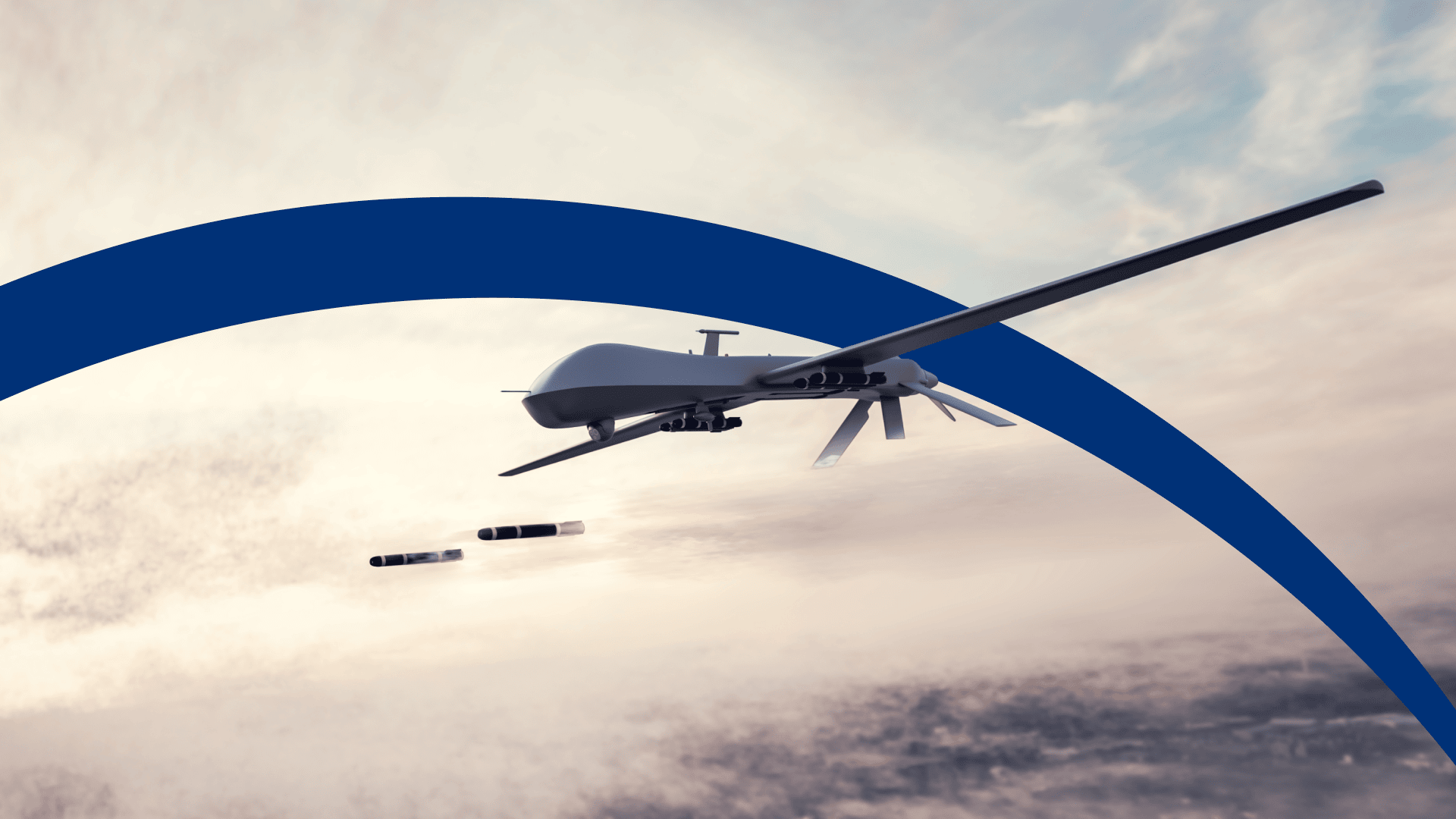
Analysts suggest that Ukraine's mid-range drone campaign is no longer merely tactical harassment but an integrated doctrine designed to blind Russian air defences, disrupt logistics and then expose deeper strategic targets, such as oil infrastructure, to long-range attack. The underappreciated detail is that Russia is now being forced into a costly redistribution of air-defence assets away from the front line and toward refineries, rail hubs and communications nodes hundreds of kilometres inside its own territory. Western analysts increasingly view the strikes less as symbolic retaliation and more as an attempt to turn Russia's vast geography, once a strategic advantage, into a logistical liability. The broader implication for NATO planners is significant: Ukraine is effectively pioneering a low-cost model of economic warfare in which relatively cheap drones can impose disproportionate costs on a larger conventional military power.
South Africa's President Ramaphosa Survives but His Party's Moral Authority May Not
South Africa's ruling ANC party's decision to close ranks around the president suggests stability for now, but exposes survival politics among the governing elite.
The ANC's unanimous backing of President Cyril Ramaphosa over the revived "Farmgate" scandal is less about personal loyalty than institutional self-preservation ahead of crucial municipal elections later this year. The more revealing dynamic is that Ramaphosa, once the face of post-Zuma clean governance, is now relying on the same party machinery he previously criticised in rivals. Analysts note that the ANC appears more concerned about avoiding a leadership vacuum in a fragile coalition era than defending ethical credibility, especially with opposition parties sensing vulnerability. The deeper risk for Pretoria is not immediate impeachment, which remains unlikely, but the gradual erosion of investor confidence in the ANC's long-promised anti-corruption reset.
U.K.'s Starmer Faces Drawn-Out Fight for His Position
Starmer insists he will fight on, but a real contest is already forming.
The leadership question inside the U.K.'s Labour party is no longer hypothetical, but structured around a slow-motion contest in which Keir Starmer is attempting to reassert authority while rival power centres consolidate their own platforms. The less obvious detail is procedural, in that Andy Burnham's potential return via a by-election is now functioning as a gatekeeper event for any formal challenge. Wes Streeting's positioning, meanwhile, is less about immediate numbers and more about defining the post-Starmer ideological frame, particularly on Brexit, where the issue is being used as a proxy for a broader "reset" narrative within the party. Beneath the public language of unity, the Labour machine is already behaving like a pre-contest system, with factions testing viability, messaging discipline, and trade union alignment ahead of a leadership opening that may arrive without a formal resignation.
Peru's Markets Hear a Familiar Echo of Former PM Castillo
Roberto Sanchez is attempting to reassure investors without alienating the anti-establishment coalition.
Presidential candidate, Roberto Sanchez, has appointed former economy minister Pedro Francke to lead the team drafting his economic plan, ahead of the June runoff Presidential vote against frontrunner Keiko Fujimori. The decision is widely seen in Lima as an effort to calm financial markets unnerved by proposals to rewrite mining contracts and expand state influence over strategic industries. Sanchez appears to be recreating the "dual messaging" strategy used by jailed former president Pedro Castillo in 2021, pairing radical political rhetoric with moderate technocratic economic management. Investors are watching closely to see whether Francke's role represents genuine restraint or merely a temporary stabilising mechanism ahead of constitutional reforms that could fundamentally alter Peru's investment framework.
Rome and New Delhi Build a Post-Atlantic Partnership
Italy's embrace of India reflects a broader European calculation that strategic autonomy now requires deeper ties with rising middle powers beyond Washington and Beijing.
Prime Minister Narendra Modi's visit to Rome this week, has elevated India-Italy relations into a special strategic partnership. The more consequential shift is Europe's growing view of India as both an economic hedge and a geopolitical counterweight in an increasingly fragmented global order. Beyond trade expansion, the negotiations focused on critical minerals, AI, maritime connectivity and supply-chain resilience, sectors now considered instruments of strategic security rather than commerce alone. Italian officials are also quietly positioning Rome as a southern European gateway for Indian investment into the Mediterranean and North Africa, further broadening the relationship. Europe's recalibration toward India is part of a wider effort to reduce overdependence on both the United States and China simultaneously.
Nigeria and US Deepen Counterterrorism Alliance
Joint strikes against Islamic State commanders reveal Washington's growing reliance on Nigeria as instability spreads across West Africa.
Nigeria said joint operations with the United States killed 175 Islamic State militants, including several senior leaders, in one of the largest coordinated counterterrorism offensives in the region in recent years. The strikes come as jihadist violence intensifies across West Africa following military coups and weakening state control in countries such as Niger, Mali and Burkina Faso. Beyond the immediate military success, the operation signals a deeper shift in US strategy: with access shrinking elsewhere in the region, Washington is increasingly treating Nigeria as its principal security partner in Africa. Officials and analysts believe the campaign is aimed not only at eliminating militant leaders, but at preventing Islamic State affiliates from establishing a durable regional network capable of threatening trade routes, energy infrastructure and coastal states.
Central Asia Becomes Arena for Critical Minerals Competition
Russia warns over US-EU engagement as control over rare earth supply chains intensifies across the region.
Russia has expressed concern over growing US and EU efforts to secure rare earth and critical mineral access in Kazakhstan, Uzbekistan, Kyrgyzstan, Tajikistan and Turkmenistan, reflecting rising competition for resources essential to advanced technology and defence industries. The development emphasises how these materials are increasingly treated as strategic assets rather than commercial commodities, particularly given China's dominance in global processing capacity. Analysts note that Central Asia's geography makes it a pivotal corridor linking European, Russian and Chinese industrial supply chains. An additional emerging dynamic is that local governments are now using this competition to diversify partnerships and extract greater economic leverage from all external powers.
Unrest in Bolivia Disrupts Economic Functioning in La Paz
Protests over austerity measures are beginning to spill into financial access and urban mobility, prompting diplomatic calls for calm.
Banks in La Paz, Bolivia, have temporarily closed several branches as widening protests over economic reforms, inflation pressures and subsidy cuts disrupt commercial activity in the capital. Public demonstrations are increasingly interfering with transport routes and urban services. Diplomatic missions have urged restraint as authorities face a convergence of labour unrest and political opposition mobilisations that are beginning to test the government's capacity to maintain routine economic function. According to analysts, Bolivia faces its worst economic crisis in a generation as it stands caught between the exhaustion of a state-led economy and the absence of a viable alternative.
Hungary's PM Visit Marks Show of EU Repositioning
The new Hungarian prime minister's first foreign trip underscores a rapid attempt to reset Budapest's relations with key European partners.
Hungary's Prime Minister, Peter Magyar's first official visit to Poland is being framed as a deliberate signal of alignment with pro-EU leadership in Warsaw, with talks centred on bilateral cooperation, energy links and rebuilding regional trust within Central Europe. Choosing Poland and Prime Minister Donald Tusk highlights a conscious effort to anchor Hungary's diplomatic reset in a model of EU reintegration. Domestically, the visit also serves to reinforce Magyar's broader agenda of distancing his government from the previous administration's strained relations with Brussels, particularly over rule-of-law disputes and frozen EU funds.
Europe's EV Surge Accelerates Under Fuel Price Pressure
Rising petrol costs linked to the Iran conflict are reshaping consumer demand and strengthening momentum toward electric mobility.
Electric vehicle sales across Europe have risen sharply as sustained fuel price increases, driven in part by instability linked to the Iran conflict, push consumers away from combustion engines and toward electric alternatives. EV adoption is expanding beyond early adopters into mid-market households that now view electrification as a practical hedge against energy volatility. Alongside stronger retail demand, manufacturers and suppliers are reporting a renewed boost in investment across the industry, signalling confidence that the transition is entering a more capital-intensive phase.
Looking Ahead to Next Week
Iran Makes Bold Threat in Response to U.S. Pressure
Washington and Tehran are no longer negotiating peace so much as competing over who defines the post-war order.
Almost three months after the U.S.-Israeli strikes on Iran, with the world eagerly anticipating a deal, the situation, as one regional official describes it, resembles a war of attrition. Diplomacy has yielded little progress and the sticking points remain the missile programme, nuclear capabilities and control of the Strait of Hormuz. Iranian insiders explain that these issues are ideological pillars of the Islamic Republic and to give them up is privately framed as strategic capitulation, not diplomacy. Analysts suggest that both Washington and Tehran appear to believe economic pressure will eventually break the other side first. President Trump announced that a planned strike on Iran this week has been called off, pending an acceptable deal brokered by Gulf states, failing which he was "prepared to go forward with a full, large scale assault." In response, Iran has made a counter-threat to spread the war beyond the region.
Slovenia Moves Sharply Right as Janez Jansa Nears Return to Power
The formation of a new coalition marks a significant political reversal after four years of liberal government under outgoing Prime Minister Robert Golob.
Veteran conservative leader Janez Jansa is poised to become Slovenia's prime minister for a fourth time after securing parliamentary backing for a coalition government. The shift is politically significant because it repositions Slovenia closer to the growing bloc of nationalist and conservative governments in Central Europe after a period of strongly pro-EU liberal leadership under Robert Golob. The coalition's dependence on smaller anti-establishment partners may make the government less stable than its parliamentary numbers initially suggest, particularly on issues such as migration, media policy and EU relations. In the coming week, attention will focus on the formal confidence vote and on whether Jansa signals early policy shifts, which could reshape Slovenia's role inside the EU.
China and Russia Deepen Energy Alignment Amid Gulf Turbulence
The Beijing meeting portrayed how energy security is becoming the central pillar of the modern China-Russia partnership.
Xi Jinping hosted Vladimir Putin for an informal 'tea diplomacy' summit in Beijing, with discussions focused heavily on long-term energy cooperation, trade settlement systems and strategic coordination. The meeting comes as the Iran war and instability around the Strait of Hormuz have increased China's reliance on Russian oil and gas supplies, reinforcing Moscow's importance as a stable overland energy partner for Beijing. Analysts note that Russia's energy exports to China have risen sharply this year, while both governments are accelerating efforts to expand pipeline capacity and reduce exposure to maritime disruption. In the coming week, attention will focus on whether the two sides announce concrete progress on the Power of Siberia 2 pipeline or additional yuan-based energy settlement mechanisms that could deepen their economic integration.
Pakistan Quietly Delivers Under Mutual Defence Pact
Islamabad's deployment to Saudi Arabia during the Iran war highlights how regional security arrangements are being reshaped beyond traditional alliances.
Pakistan has deployed roughly 8,000 troops, fighter jets, drones and a Chinese HQ-9 air defence system to Saudi Arabia during the Iran conflict under a confidential mutual defence agreement between the two states. The deployment is significant not only for its scale, but because Pakistan simultaneously positioned itself as a mediator in ceasefire discussions while deepening direct military coordination with Riyadh. Analysts note that this further strengthens Pakistan's role as a guarantor of Gulf security, particularly as Saudi Arabia seeks additional protection for its energy infrastructure following Iranian strikes earlier this year. Crucially, the pact places Saudi Arabia under Pakistan's nuclear umbrella. Ensuing events will reveal whether the deployment evolves into a more permanent regional security architecture.
Israel's Coalition Crisis Deepens Amid Regional Security Volatility
The Knesset voted to dissolve parliament, potentially triggering early elections.
Israel's parliament took a formal step toward a possible snap election after Prime Minister Netanyahu's own coalition submitted a bill to dissolve parliament. Coalition tensions have intensified over military conscription exemptions for ultra-Orthodox Jews. The political timing is particularly sensitive given the broader regional climate, with Israel still at war on three fronts. In the coming week, attention will focus on whether coalition negotiations can stabilize the government or whether additional defections push Israel closer to elections that could significantly reshape wartime leadership dynamics.
.png)

© 2026 Global Vantage Forum